
Blogs
Hard vs Soft Tennis Cricket Bat: Key Differences & Buying Guide
Aug
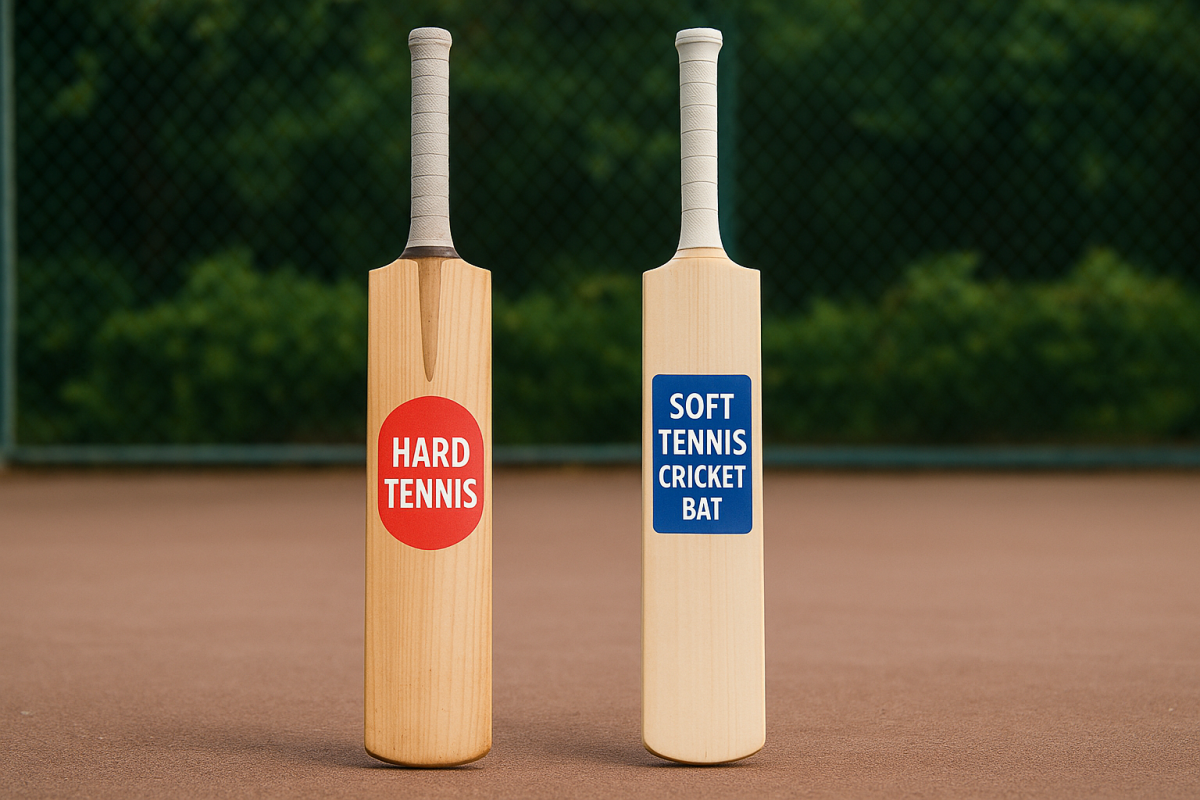
Hard vs soft tennis cricket bat is one of the most common debates among tennis-ball cricket players looking for the perfect bat. Understanding the differences in design, materials, and playing style can help you select the ideal bat for your needs.
Material & Build Differences in Hard vs Soft Tennis Cricket Bat
| Feature | Hard Tennis Bat | Soft Tennis Bat |
|---|---|---|
| Wood | Kashmir willow (durable, power-oriented) | Poplar wood (lighter, cheaper) |
| Weight | Heavier for handling fast, heavy balls | Lighter for easier swings |
| Edge Thickness | Thicker edges for power and sweet spot | Moderate edges for maneuverability |
| Scoop Design | Often present for weight reduction and balance | May have scoop or flat back |
| Sweet Spot | Lower for front-foot driven powerful shots | Central or higher for softer strokes |
Key Differences Explained in Hard vs Soft Tennis Cricket Bat
1. Power & Control
The hard vs soft tennis cricket bat choice defines your game style. Hard tennis bats deliver more power due to thicker blades and shock-absorbing cane handles, essential for heavy balls traveling at high speed. Soft tennis bats prioritize lightness and control, ideal for casual and youth players.
2. Durability
Hard tennis bats typically use Kashmir willow which stands up to the repeated impact of heavy tennis balls, ensuring longevity. Soft tennis bats made of poplar wood may wear faster if used with hard balls but excel in comfort.
3. Scoop Design
Scoop bats, favored in hard tennis cricket, reduce weight without compromising power and improve balance, making shots easier and quicker. This feature decreases mishits and shock from the ball’s impact. Soft tennis bats may or may not utilize scoops depending on manufacturer preferences.
4. Playing Style
If you want aggressive power hitting, choose a hard tennis bat designed to maximize stroke force. For finesse, timing, and skill shots especially in social or youth games, soft tennis bats offer the flexibility and lightweight feel that enhances maneuverability.
How to Choose Your Hard vs Soft Tennis Cricket Bat
- Confirm which tennis ball type you play with consistently.
- Opt for Kashmir willow wood for hard tennis ball play vs poplar wood for soft tennis.
- Consider your batting style – heavier bats for power, lighter for speed.
- Look for a scoop bat for playing hard tennis cricket to balance power and control.
- Review the sweet spot’s position relative to your preferred strokes (lower for front-foot shots in hard tennis).
Maintenance Tips for Hard vs Soft Tennis Cricket Bat
- Tennis cricket bats do not require oiling or knocking like leather cricket bats.
- Use scuff sheets on hard tennis bats to protect against moisture during grass play.
- Clean your bat with a dry cloth; avoid wet cleaning to preserve wood integrity.
Frequently Asked Questions About Hard vs Soft Tennis Cricket Bat
- Can I use a hard tennis bat for soft tennis cricket?
Yes, but the bat may feel heavier and overpowered for the softer ball. - Is a scoop bat better for hard tennis cricket?
Scoop bats offer better weight distribution and control, making them ideal especially for less experienced players. - Which bat lasts longer?
Hard tennis bats made from Kashmir willow typically have superior durability compared to soft tennis bats.
Conclusion
Choosing between a hard vs soft tennis cricket bat depends on your ball type, playing style, and performance goals. Hard tennis bats maximize power and durability for competitive play, while soft tennis bats offer lightweight flexibility suited for casual or youth matches. Incorporating the right bat into your game can significantly improve your batting success and enjoyment.
